 WORLDTECH
Europe's new Sentinel-3C satellite just sent back spectacular images of Earth
Full credit
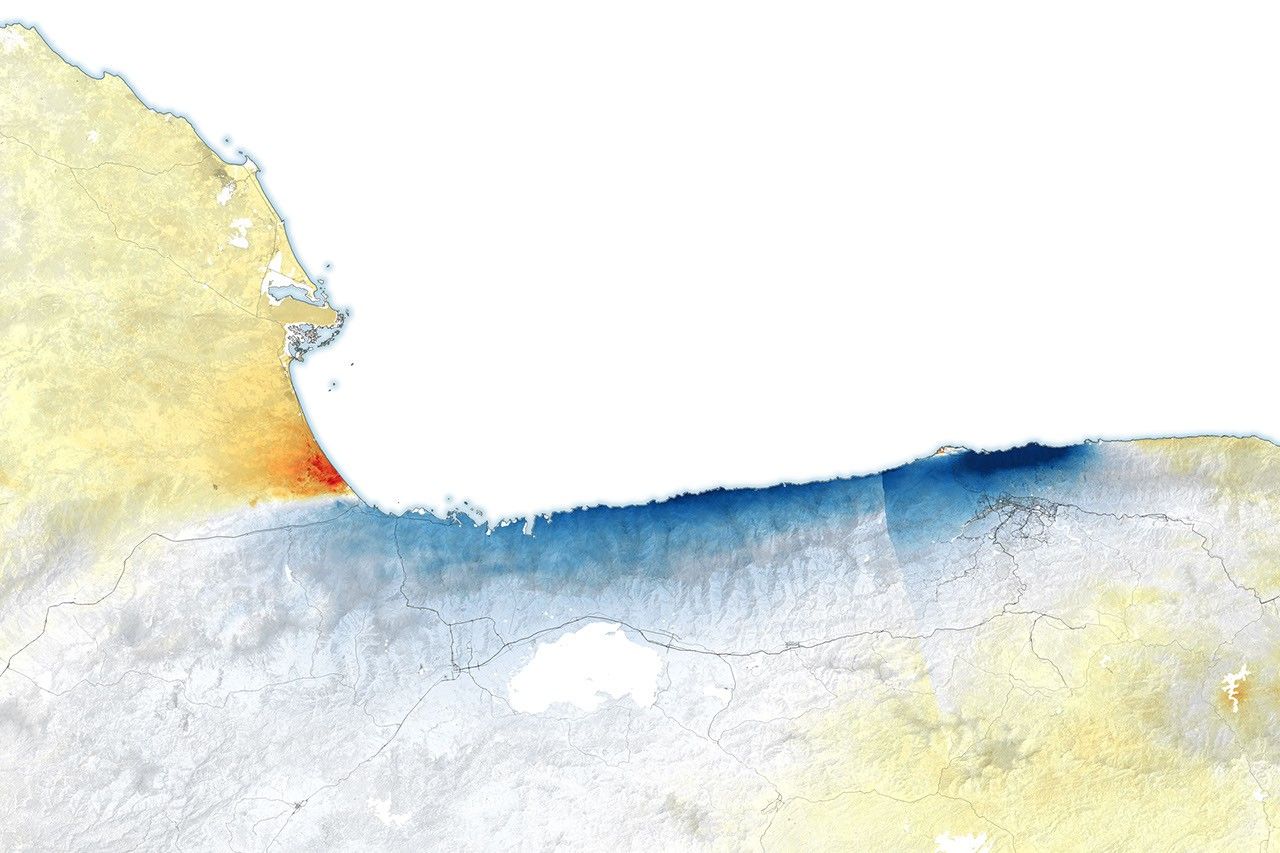
File:Where Venezuela’s Earthquakes Shifted the Ground (where-venezuelas-earthquakes-shifted-the-ground - lrg).jpg / NASA Earth Observatory/Lauren Dauphin / Where Venezuela’s Earthquakes Shifted the Ground / Wikimedia Commons / Public Domain / https://commons.wikimedia.org/wiki/File:Where_Venezuela%E2%80%99s_Earthquakes_Shifted_the_Ground_(where-venezuelas-earthquakes-shifted-the-ground_-_lrg).jpgSource page.jpg)
What happened
Share: Facebook Twitter Pinterest LinkedIN Email FULL STORY Just two weeks after reaching orbit, Europe's new Copernicus Sentinel-3C (ESA Earth observation satellite) satellite has delivered its first spectacular images of Earth, revealing everything from the snow-covered Alps to the frozen Arctic and the brilliant turquoise waters of the Caribbean. Europe's Sentinel-3C satellite has returned breathtaking images of Earth just two weeks after launch, revealing the snowy Alps, frozen Arctic islands, and brilliant turquoise Caribbean waters. The European Space Agency is a research and development company based in Paris.
Date: October 12, 2026 Source: European Space Agency (ESA) Summary: Europe's Sentinel-3C satellite has returned breathtaking images of Earth just two weeks after launch, revealing the snowy Alps, frozen Arctic islands, and brilliant turquoise Caribbean waters. But the satellite is doing much more than taking beautiful pictures.
Its instruments have also begun measuring ocean heights and the elevation of Greenland's massive ice sheet, providing an early demonstration of technology designed to monitor Earth's changing climate. The first images and measurements come from two of Sentinel-3C's key instruments.
Sources & evidence
- ScienceDaily Space & Time Reporting source
Europe's new Sentinel-3C satellite just sent back spectacular images of Earth ↗
https://www.sciencedaily.com/releases/2026/10/261011211559.htm - ScienceDaily Reporting source
Europe's new Sentinel-3C satellite just sent back spectacular images of Earth ↗
https://www.sciencedaily.com/releases/2026/10/261011211559.htm