 WORLDTECH
James Webb reveals why planet formation is a race against time
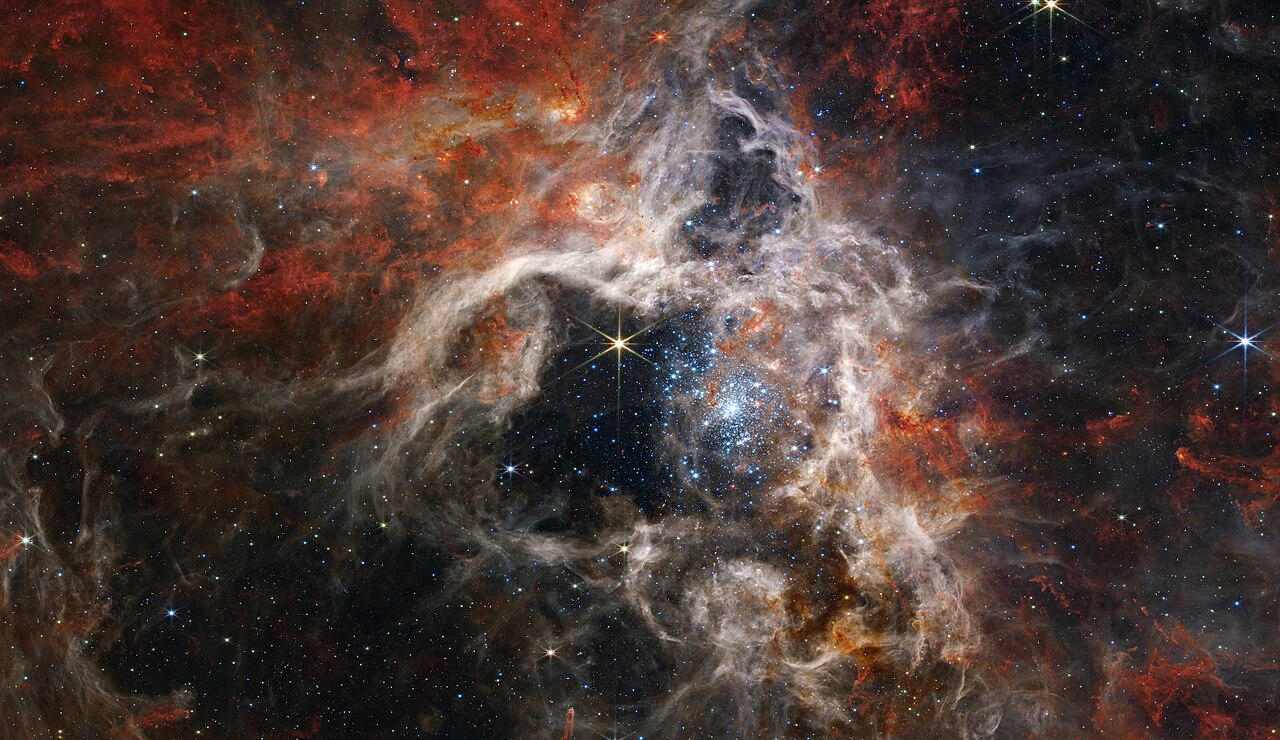
Full credit
File:Tarantula Nebula by JWST.jpg / NASA, ESA, CSA, STScI, Webb ERO Production Team / https://webbtelescope.org/contents/media/images/2022/041/01GA76MYFN0FMKNRHGCAGGYCVQ / Wikimedia Commons / Public Domain / https://commons.wikimedia.org/wiki/File:Tarantula_Nebula_by_JWST.jpgSource page
What happened
JWST has revealed that young planetary systems lose their planet-building gas through a changing mix of powerful jets, molecular winds, and radiation-driven outflows. As the disks age and their gas disappears, giant planets face a shrinking window to build massive atmospheres.
Science News from research organizations James Webb reveals why planet formation is a race against time JWST reveals that newborn planets are racing against powerful winds and radiation before their supply of planet-building gas disappears. Date: September 28, 2026 Source: SETI Institute Summary: JWST has revealed that young planetary systems lose their planet-building gas through a changing mix of powerful jets, molecular winds, and radiation-driven outflows.
Share: Facebook Twitter Pinterest LinkedIN Email FULL STORY Planets take shape inside disks of gas and dust surrounding young stars, but the supply of gas they depend on is temporary. New observations from NASA's James Webb Space Telescope (JWST) are giving astronomers a clearer picture of how that gas escapes and how the dominant escape mechanisms change as planetary systems mature. Nearly all of that gas eventually disappeared.
Sources & evidence
- ScienceDaily Reporting source
James Webb reveals why planet formation is a race against time ↗
https://www.sciencedaily.com/releases/2026/09/260925093158.htm