 WORLDTECH
Astronomers Find a Sub-Neptune Orbiting Completely Backward Around a Red Dwarf
What happened
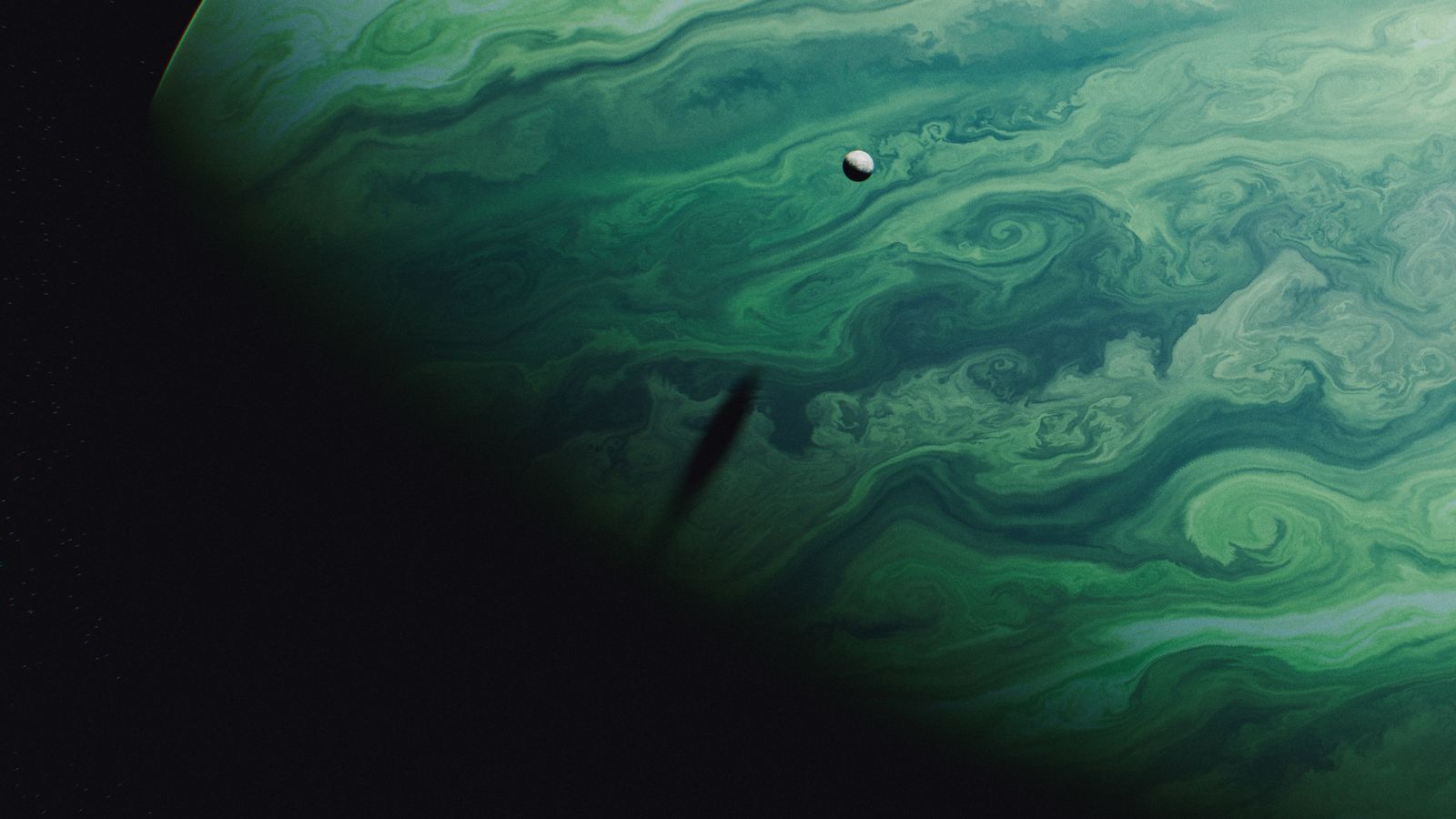
None are more than 7° or so out of alignment with the equator, and all of them rotate in the same direction as the Sun itself. The planet, known as GJ 3090 b, is a “sub-Neptune”, roughly 2.2 times the width of Earth with 4.5 times the mass.
It orbits a cool, dim red dwarf located 73 light-years away in the southern constellation Phoenix about once every 2.9 days. The researchers were trying to resolve that orbit using the 3.6m telescope at the European Southern Observatory in Chile.
An obvious way to find details of that orbit is to closely watch a planet’s “transit” when it passes in front of its star. In particular, the researchers were looking for something called the Rossiter-McLaughlin (RM) effect.
As a star rotates, the side that is spinning towards the observing telescope is slightly blueshifted due to the motion of that part of the star towards the observer. That also means that the other side, which is turning away from the observer, would appear slightly redshifted.
Sources & evidence
- Universe Today Reporting source
Astronomers Find a Sub-Neptune Orbiting Completely Backward Around a Red Dwarf ↗
https://www.universetoday.com/articles/astronomers-find-a-sub-neptune-orbiting-completely-backward-around-a-red-dwarf