 WORLDTECH
These massive stars could explain Webb’s strangest galaxies
WORLDTECH Brief: a short report of a current development, carrying only what WORLDTECH can ground in the sources below. It is expanded into a full WORLDTECH Story if further usable material becomes available.
Single source: this development was reported by ScienceDaily. What WORLDTECH can establish is that the report was made, and by whom. It has not been matched against a second independent organisation and has not been officially confirmed by the organisations involved.
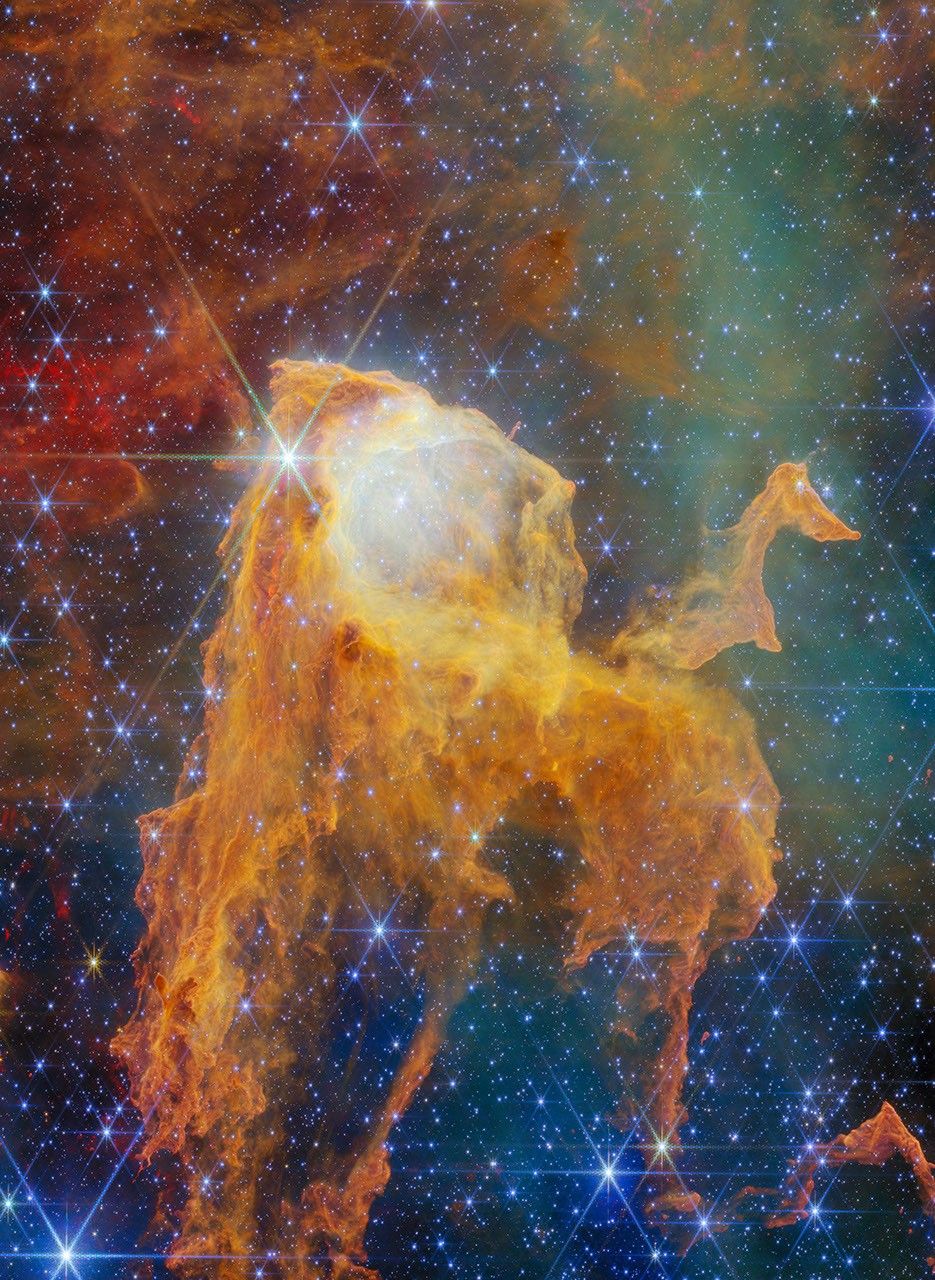
Full credit
File:A Treasure Chest in the Carina Nebula (APOD 2026-09-17).jpg / NASA / A Treasure Chest in the Carina Nebula / Wikimedia Commons / Public Domain / https://commons.wikimedia.org/wiki/File:A_Treasure_Chest_in_the_Carina_Nebula_(APOD_2026-09-17).jpgSource page.jpg)
What happened
Researchers found that stellar winds weaken sharply at extremely low metallicities, potentially allowing massive stars to retain more material and evolve in unexpected ways. The team also found large differences in iron abundance, a key ingredient in stellar winds and supernovae. Hubble observations of massive stars in metal-poor dwarf galaxies are revealing clues to why the early universe looks so unusual.
Key facts
- Researchers — found: that stellar winds weaken sharply at extremely low metallicities, potentially allowing massive stars to retain more material and evolve in unexpected ways
- The team also — found: large differences in iron abundance, a key ingredient in stellar winds and supernovae
Sources & evidence
- ScienceDaily Reporting source
These massive stars could explain Webb’s strangest galaxies ↗
https://www.sciencedaily.com/releases/2026/09/260923035922.htm