 WORLDTECH
Hubble Space Telescope may have found a planet born after its star died
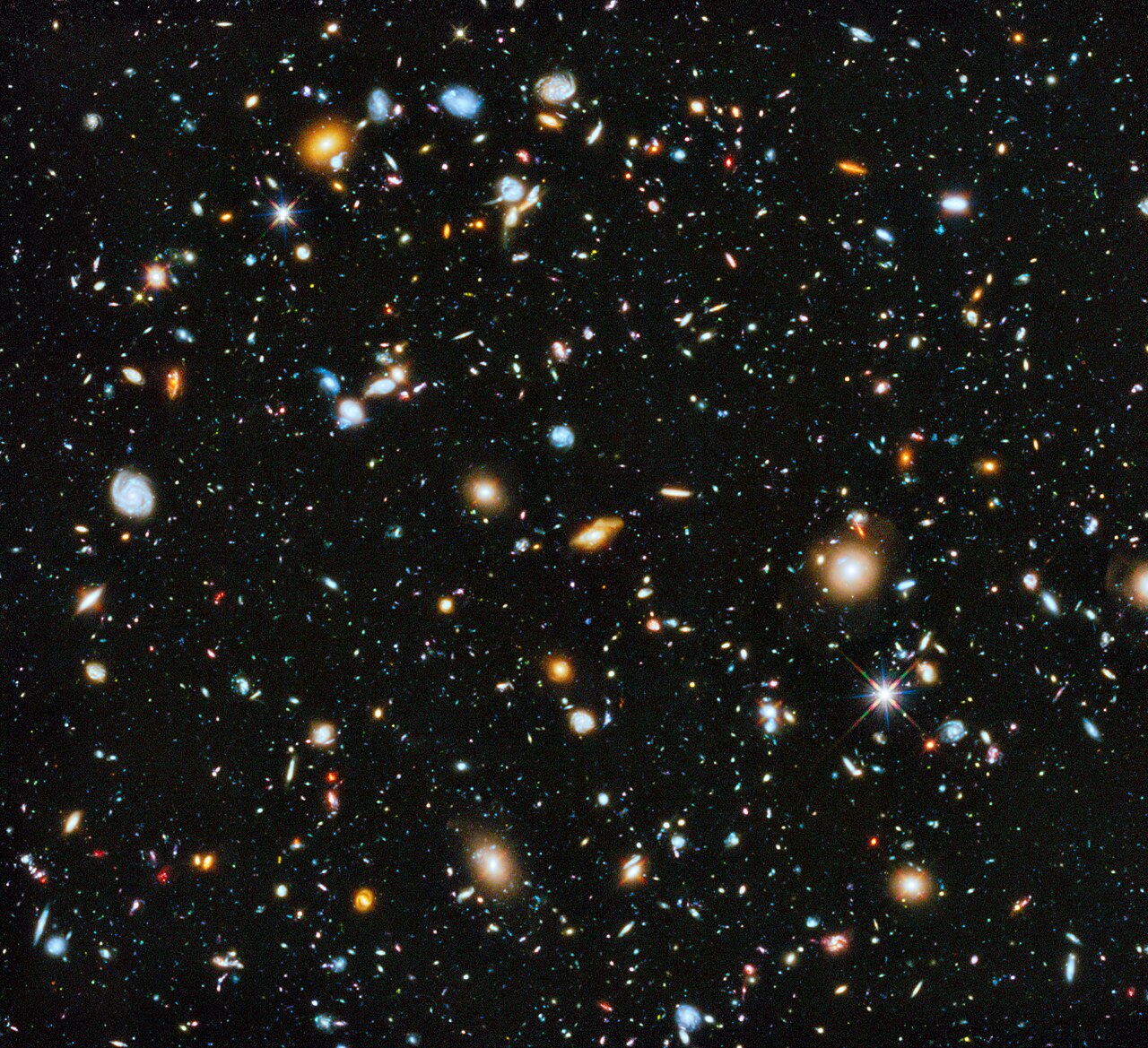
Full credit
File:NASA-HS201427a-HubbleUltraDeepField2014-20140603.jpg / NASA, ESA, H. Teplitz and M. Rafelski (IPAC/Caltech), A. Koekemoer (STScI), R. Windhorst (Arizona State University), and Z. Levay (STScI) / http://hubblesite.org/newscenter/archive/releases/2014/27/image/a/ ( image link ) / Wikimedia Commons / Public Domain / https://commons.wikimedia.org/wiki/File:NASA-HS201427a-HubbleUltraDeepField2014-20140603.jpgSource page
What happened
Astronomers found unusually high levels of niobium around the white dwarf HS 0209+0832, suggesting some of the star’s expelled material may have assembled into a new gas giant. Science News from research organizations Hubble Space Telescope may have found a planet born after its star died Date: October 9, 2026 Source: NASA Summary: A strange chemical signature in old Hubble observations may point to a planet that formed after its star had already died.
Share: Facebook Twitter Pinterest LinkedIN Email FULL STORY Astronomers revisiting decades-old observations from NASA's Hubble Space Telescope have found a new clue in a long-running cold case. A strange chemical signature in old Hubble observations may point to a planet that formed after its star had already died.
TESS data also hints at a Jupiter-sized planet orbiting just 3.7 million miles from the star. 5 in Nature Astronomy, an unusual chemical signature suggests that the white dwarf HS 0209+0832 could be home to a second-generation planet. A white dwarf is the leftover core of a low-mass star that has exhausted its nuclear fuel and shed its outer layers of gas and dust into space.
Key facts
- Astronomers — found: unusually high levels of niobium around the white dwarf HS 0209+0832, suggesting some of the star’s expelled material may have assembled into a new gas giant
- Science News from research organizations Hubble Space Telescope may have — found: a planet born after its star died Date: October 9, 2026 Source: NASA Summary: A strange chemical signature in old Hubble observations may point to a planet that formed after its star had already died
Sources & evidence
- ScienceDaily Reporting source
Hubble Space Telescope may have found a planet born after its star died ↗
https://www.sciencedaily.com/releases/2026/10/261007042106.htm