 WORLDTECH
Webb and Hubble observe stellar nurseries, galaxies, and gravitational lensing in new images
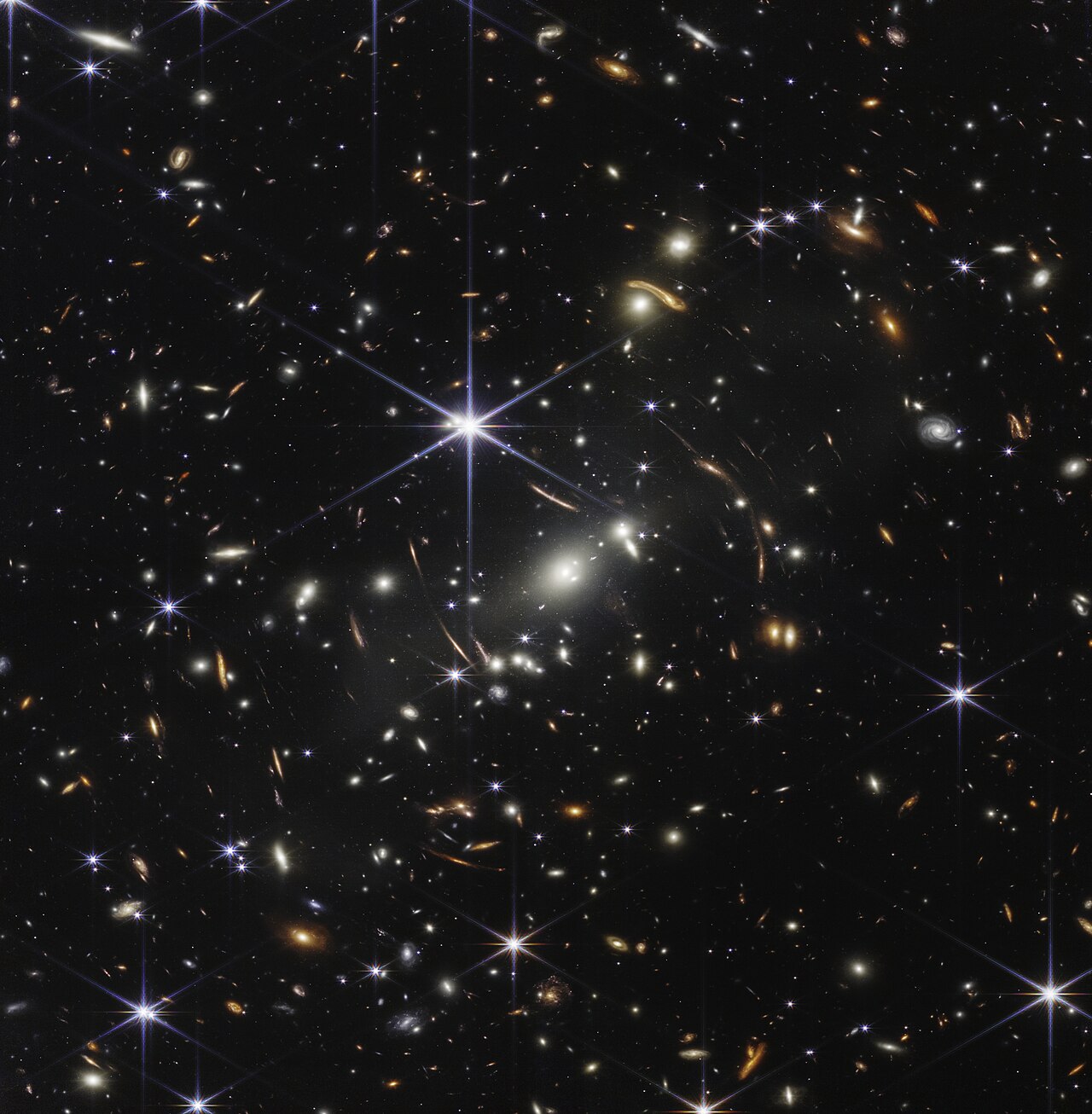
Full credit
File:Webb's First Deep Field.jpg / NASA, ESA, CSA, and STScI / https://webbtelescope.org/contents/media/images/2022/038/01G7JGTH21B5GN9VCYAHBXKSD1 / Wikimedia Commons / Public Domain / https://commons.wikimedia.org/wiki/File:Webb%27s_First_Deep_Field.jpgSource page
What happened
Webb’s reveals baby stars within NGC 7129 Located 3,300 light-years from Earth is a stellar nursery named NGC 7129 — a region filled with clouds of dust that help kickstart the formation of stars. Teams using the James Webb Space Telescope and the Hubble Space Telescope — both jointly… The post Webb and Hubble observe stellar nurseries, galaxies, and gravitational lensing in new images appeared first on NASASpaceFlight.com .
Webb’s images highlight a stellar nursery and galaxy cluster, while Hubble’s images show an out-of-sync galaxy and a bubble-like nebula. While these dust clouds are largely responsible for the formation of young protostars, they also block the light from young stars at optical wavelengths. Webb’s incredible infrared sensitivity allows its suite of instruments to see directly through this dust, revealing hundreds of stars at different stages of their evolutionary lives.
Sources & evidence
- NASASpaceFlight Reporting source
Webb and Hubble observe stellar nurseries, galaxies, and gravitational lensing in new images ↗
https://www.nasaspaceflight.com/2026/10/jwst-hubble-images-1026/